

University of Arizona honors Computer Science graduate coordinator Tina Mendoza with GPC’s Outstanding Contributions Award
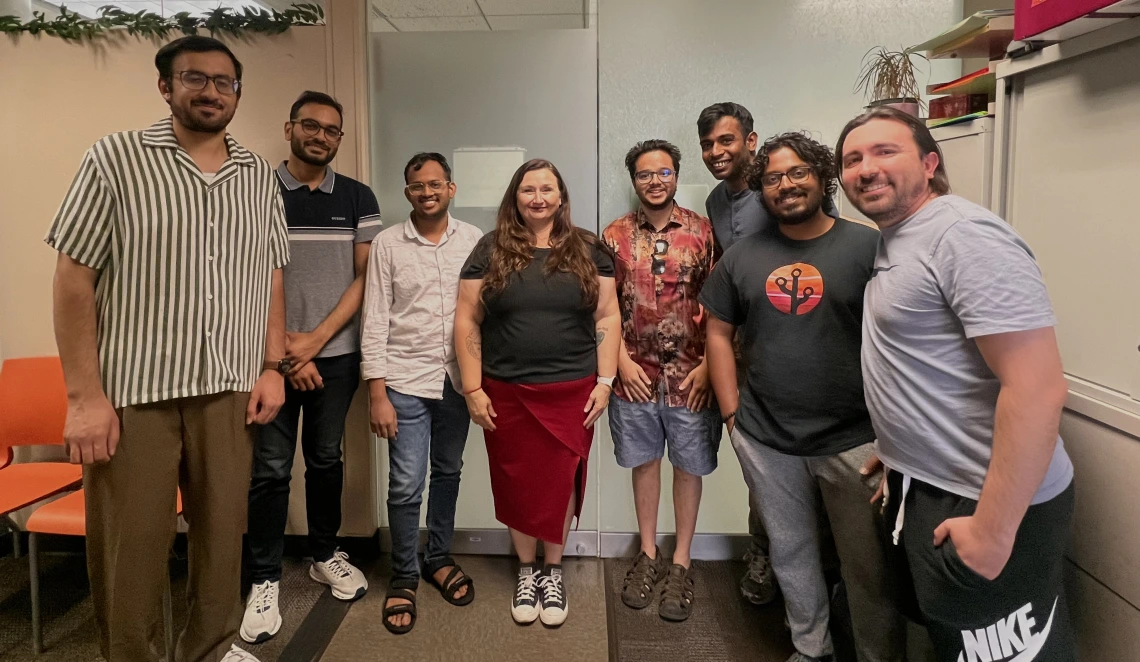
Tina Mendoza earned the Graduate Program Coordinator’s Outstanding Contributions Award for her work with graduate students.
By McKenna Manzo
When graduate students at the University of Arizona hit a roadblock – whether it’s funding, paperwork, or a personal crisis – there’s often one person working behind the scenes to keep them moving forward. For many in the Department of Computer Science, that person is Tina Mendoza.
This spring, Mendoza was recognized for that work, earning the Graduate Program Coordinator’s Outstanding Contributions Award, an honor given annually to a coordinator who goes above and beyond in supporting graduate students and strengthening their academic experience. The recipient is selected through a competitive nomination process that includes letters of support from students and colleagues.
“Graduate Program Coordinators are the backbone of our graduate programs and the efforts from these individuals are directly linked to graduate student success,” said Dr. Kirsten Limesand, Vice provost for Graduate Education and the Dean of the Graduate College. “It was eminently clear from the student quotes, Tina has had a tremendous positive impact on the success of graduate students in the Computer Sciences graduate program.”
Mendoza, who has served as the graduate program coordinator for computer science since November 2021, said the recognition came as a surprise.
“It means so much to me,” Mendoza said. “I did not expect to receive this award. I know there are lots of very talented grad coordinators on campus so to be selected for this award was amazing to me.”
Her role, though often behind the scenes, is central to a student's entire academic journey. From the moment a student applies to the program to the day they graduate, and even beyond, Mendoza acts as a guide, advocate, and problem solver.
“I like to think of it as supporting students from application to graduation and whatever life brings in between,” she said.
That “in between” can be complicated. Graduate students often face financial strain, family responsibilities, and unexpected life events that can derail their progress. Mendoza said one of the most important parts of her job is helping students navigate those challenges before they become insurmountable.
“They worry about how to pay for the cost of living… some of them have families,” she said. “So every time we find some sources of funding or travel awards, we like to make sure they are aware of those opportunities.”
In more serious cases—such as when a student faces a sudden illness or accident—the stakes can be even higher. Graduate students funded through assistantships may face steep financial penalties if they need to take a leave of absence mid-semester.
“The important thing is to take care of them as a person,” Mendoza said. “If we can help them take the time that they need to be able to come back, you also have to find a way that it would be financially feasible for them to come back.”
That often means coordinating across departments, contacting faculty, and finding emergency funding solutions all while easing the burden on the student.
“No day is ever really the same,” she said. “Sometimes it takes a lot of time and energy to get one little thing for them. In the end it’s worth it because it makes their life easier and keeps them from having a bad consequence.”
Mendoza’s approach is shaped in part by her own unconventional path through higher education. A first-generation college student, she began her career in fire science and emergency medical technology, working as a licensed EMT and earning firefighter certification. After stepping away from school for a period, she returned as a nontraditional student, eventually earning a bachelor’s degree in linguistics, completing graduate coursework at Harvard University, and finishing a master’s degree in library and information science through the University of Arizona.
“It has been a long starting and stopping process to get through a graduate degree for me,” she said. “I don’t assume people can pay for things, because sometimes $25 is a huge amount of money for someone.”
That perspective helps her connect with students who may also be navigating higher education without a clear roadmap.
“I have a special place in my heart for graduate students,” she said. “It is such a demanding process… I just felt like with my skills I could support graduate students in a unique way.”
Before joining the computer science department, Mendoza worked in a student-facing administrative role in the communication department. When a longtime graduate coordinator retired, she stepped into the position—drawn by the opportunity to work more closely with students.
“I really enjoy working with students,” she said. “It was a way to learn more and expand my skills.”
Now, her favorite part of the job is seeing those students succeed, especially when they’ve overcome significant challenges to get there.
“It is always rewarding when you feel like you can help a student be successful in a variety of ways,” she said.
For students who may be struggling, Mendoza offers simple but important advice: ask for help early.
“The sooner you come in, the more options you have,” she said. “The longer you wait, those choices start to disappear.”
As for the award, Mendoza remains focused less on recognition and more on the work itself.
“I feel so fortunate to have this opportunity to work with students,” she said. “I’m just grateful.”
If you would like to learn more about Mendoza and her role at the University of Arizona, click here.