

Vaibhav Joshi
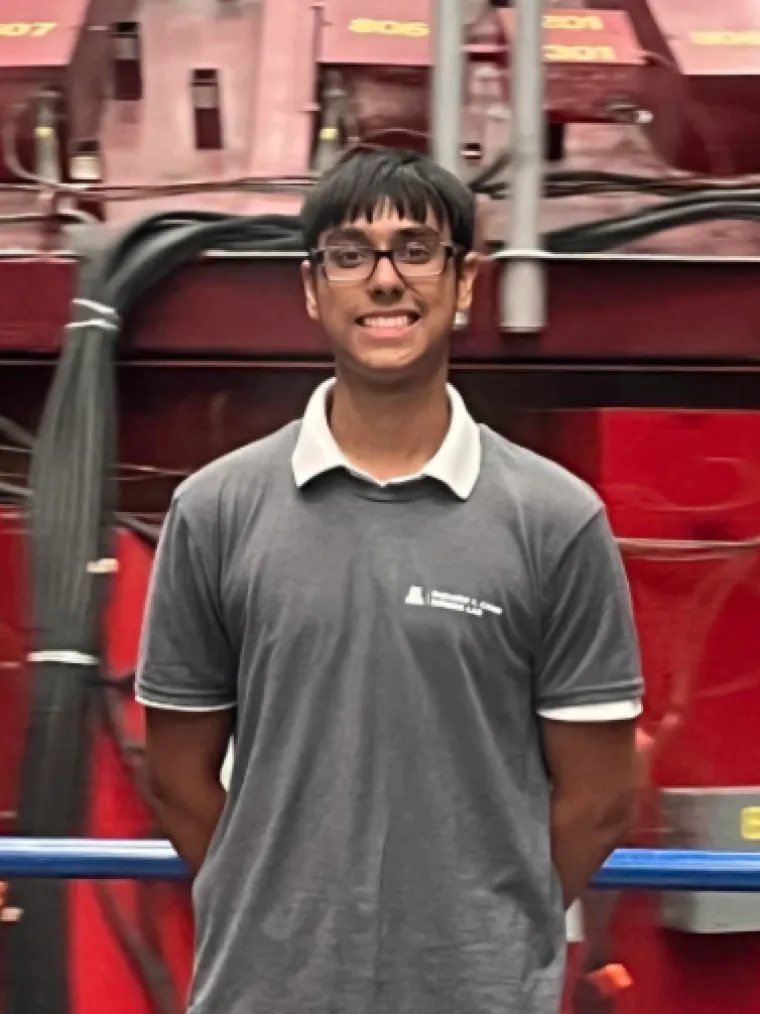
Major & Minor
Majors: Astronomy and Physics
Minors: Math and Japanese
Hometown
New Delhi, India and Gurnee, Illinois
What made you choose your science major at this school?
- Always being a very curious person, physics and astronomy constantly quenched that thirst for knowledge I’ve always had and allowed me to ask profound, insightful questions about the universe.
How hard were the intro science classes compared to high school?
- The honors and AP courses I had taken throughout high school gave me good background knowledge for my intro science, physics, and astronomy classes at the University of Arizona, which built upon the basics my high school classes covered to a significantly higher level and were a good level of challenge.
Do professors actually teach, or are most classes taught by TAs?
- In my experience with my major, professors are the ones that actually teach. They have all been very open to questions and change their pace based on student feedback, while TAs provide another level of accessibility that complements the professor's teaching.
How easy is it to get help if you’re struggling in a science class?
- There are a lot of resources for students in science classes at the University of Arizona and at every level. For example, the Physics department has consultation hours and the Astronomy department has ATOMM, both free tutoring and homework help services with experienced tutors and graduate students. At a bigger level, there is Think Tank that also provides free, drop-in tutoring as well as a fee-based tutoring service to all students. Outside of tutoring, students can also easily raise their hand or go to a professor after class or in their office hours; professors are more than happy to help students who are willing to ask.
When can students start doing research (freshman year or later)?
- Whenever! There is truly no limit or requirement to doing research other than an eagerness to learn and to be unafraid to make mistakes.
How did you get involved in research or labs?
- I got started with a research project in my second semester of freshman year. During the winter break after my first semester, I cold emailed every professor in the Astronomy department whose profile on the website seemed interesting and got a response from one, and the rest was history.
Are research opportunities competitive or fairly accessible?
- Research opportunities can definitely be competitive, and professors can say no to taking on undergraduates if they do not have the bandwidth to do so. That does not mean that research is not accessible and widespread across the College of Science. There are a lot of labs, groups, and professors to join, and even if a professor says no, they always recommend other professors to ask and keep you in mind for the future.
Do students get paid for research or is it mostly for credit?
- It can be either. I have never gotten paid for my research and have always done it for credit but that experience has been specific to the groups I have joined. It does not hurt to ask around for what groups in a department pay their undergraduates. There are also a lot of grants and programs through the University of Arizona and nationwide that can still fund students for doing research.
What does a typical week look like for a science major?
- As a science major, I will typically attend all of my classes, work as a preceptor/TA and sometimes grade assignments, go to Black Rock or Dutch Bros for a quick pick-me-up, and study and do homework in either the Physics lounge, the Main Library, or my apartment. I also play badminton from time to time in South Rec at the UA Badminton Club.
How much time do you actually spend studying?
- I spend around 2-3 hours a weekday studying and 4-5 hours on weekends!
What’s the hardest science class you’ve taken—and why?
- The hardest science class I've taken has been PHYS 426 Thermal Physics. Despite the professor Dr. Charles Stafford being super accessible during class and office hours (where I even got to look at his research in the same field!), the content was still very tough as a cross between quantum mechanics and statistical physics, but the rigor made for a fun challenge!
What do you wish you had known before coming here?
- Something I wish I had known before coming to the University of Arizona was just how many opportunities for research and extra-curriculars there were! Something that would have been very helpful would have been to try as many different types of activities and research and decide what I liked from there!
What clubs and/or organizations are you involved with?
- Currently, I am involved with the UA Badminton Club. In the past, I have been president of the Japanese American Student Association (JASA) and participated in Students for Sustainability, Physics Club, and Astronomy Club. I am also involved with the College of Science Ambassador program!
What are your future plans after graduation?
- My plans after graduation are to pursue a PhD in Physics in graduate school and to become a professor at an accredited university afterwards!